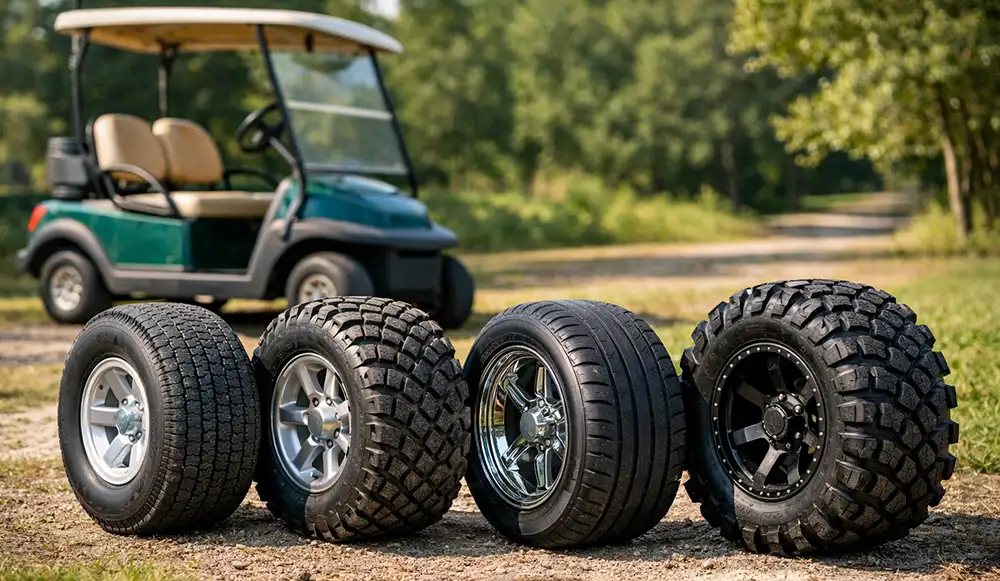
Choosing the right golf cart tires is more important than many owners realize. The type of tire on your golf cart affects traction, ride comfort, safety, and even how long your cart lasts. Whether you drive primarily on a golf course, cruise through a neighborhood, or take your cart off the beaten path, understanding tire types helps you make a smart investment.
In this guide, we’ll break down the main types of golf cart tires, explain what they’re used for, and help you decide which option best fits your needs.
Why Golf Cart Tire Selection Matters
Golf cart tires are designed with specific terrains and purposes in mind. Using the wrong type can lead to poor handling, faster wear, or damage to grass, pavement, or suspension components. Proper tire selection ensures:
- Better traction and control
- Smoother, quieter rides
- Reduced wear on your cart
- Safer driving in different conditions
Matching your tires to how and where you use your cart makes a noticeable difference.
Turf Tires
What They’re Used For
Turf tires are the most common type of golf cart tire. They are specifically designed for golf courses and grassy areas.
Key Features
- Smooth, shallow tread pattern
- Wide footprint to distribute weight evenly
- Minimal ground disturbance
Best For
- Golf courses
- Lawns and parks
- Flat, dry terrain
Pros and Cons
Pros:
- Gentle on grass
- Quiet ride
- Long-lasting on soft surfaces
Cons:
- Limited traction on mud, gravel, or wet terrain
If your cart spends most of its time on a course or well-maintained grass, turf tires are usually the best choice.
All-Terrain Tires
What They’re Used For
All-terrain tires are built for versatility. They provide better grip than turf tires while still being safe for mixed surfaces.
Key Features
- Moderately aggressive tread
- Balanced design for multiple terrains
- Improved traction without excessive noise
Best For
- Campgrounds
- Gravel paths
- Light off-road use
- Mixed grass and pavement
Pros and Cons
Pros:
- Better traction in dirt and light mud
- More versatile than turf tires
- Durable tread design
Cons:
- Slightly noisier than turf tires
- Can cause mild grass wear
All-terrain tires are ideal if you use your golf cart in more than one environment.
Street (Low-Profile) Tires
What They’re Used For
Street tires are designed for paved surfaces and neighborhood driving. They are common on street-legal or modified golf carts.
Key Features
- Smooth or lightly grooved tread
- Low rolling resistance
- Enhanced stability on pavement
Best For
- Neighborhood streets
- Resorts and retirement communities
- Paved paths
Pros and Cons
Pros:
- Smooth and quiet ride
- Better handling on asphalt
- Improved efficiency on pavement
Cons:
- Poor traction off-road
- Not suitable for grass or mud
If your cart is primarily used as a neighborhood vehicle, street tires offer comfort and control.
Off-Road / Mud Tires
What They’re Used For
Off-road tires are built for challenging environments where traction is critical.
Key Features
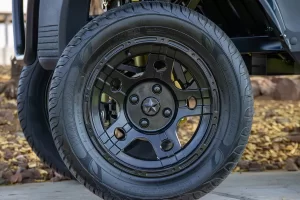
- Deep, aggressive tread patterns
- Reinforced construction
- Excellent grip in loose terrain
Best For
- Trails and woods
- Muddy or sandy areas
- Hunting and utility use
Pros and Cons
Pros:
- Superior traction in tough conditions
- Durable and rugged
Cons:
- Noisy on pavement
- Can damage grass
- Increased wear on suspension
These tires are best for carts that regularly leave paved or grassy areas behind.
How to Choose the Right Golf Cart Tires
When selecting tires, consider the following:
- Primary terrain: Grass, pavement, dirt, or mixed
- Frequency of use: Daily driving vs. occasional use
- Load requirements: Passengers, cargo, or towing
- Noise and comfort preferences
Choosing the correct tire reduces maintenance costs and improves overall performance.
When to Replace Golf Cart Tires
Signs you may need new tires include:
- Worn or bald tread
- Cracks or dry rot
- Uneven wear
- Reduced traction or slipping
For safety and proper installation, many owners rely on a professional tire replacement service to ensure correct fitment, balancing, and alignment.
Resort Life Carts Service Department
- Service Center: (559) 831-1971 (ext: 104)
- Service Address: 10740 CA-41, Madera, CA 93636
- Map
Tire FAQs
Turf tires are the most common because they are designed specifically for golf courses and grassy areas, offering a smooth ride without damaging the ground.
While all-terrain tires can be used, they may cause more wear on grass than turf tires. Many golf courses prefer or require turf tires to protect the greens.
Street tires are legal when used on street-legal golf carts and in areas where local laws allow golf cart operation on public roads. Always check local regulations.
Larger tires can increase ground clearance and traction, but they may reduce battery efficiency and put extra strain on the motor if not properly matched.
Most golf cart tires last between 3 to 6 years, depending on usage, terrain, and maintenance. Dry rot can occur even if tread looks fine.
While some owners install tires themselves, professional installation ensures proper mounting, alignment, and safety—especially when upgrading tire size or type.
Conclusion
Understanding the types of golf cart tires and what they’re used for helps you get the best performance, safety, and lifespan from your cart. From gentle turf tires to rugged off-road options, each tire serves a specific purpose. By matching your tires to your terrain and driving needs—and replacing them when necessary—you’ll enjoy a smoother, safer ride for years to come.