Symptoms of Brake Drag
Brake drag often shows up as a gradual performance decline rather than a sudden failure. The cart may feel sluggish, even with fully charged batteries. Acceleration becomes weaker, and the cart may not coast freely when you release the pedal.
Another common sign is heat buildup near the wheels. After driving, the hubs or brake drums may feel noticeably warm. This is caused by constant friction inside the braking system.
In electric carts, brake drag can also reduce driving range. The motor has to work harder to overcome resistance, which drains the batteries faster than normal.
These symptoms are often mistaken for battery or motor issues, which is why brake drag is frequently misdiagnosed.
Mechanical Causes Behind Brake Drag
Brake systems in golf carts are relatively simple, but several components must work together smoothly. When one part sticks or is out of adjustment, it can prevent the brakes from fully releasing.
One of the most common causes is tight or improperly adjusted brake cables. These cables connect the brake pedal to the braking mechanism. If they are too tight, they keep slight pressure on the brakes even when the pedal is not engaged.
This issue is widely discussed in owner communities such as Buggies Gone Wild, where many users report that incorrect cable adjustment was the root cause of persistent drag.
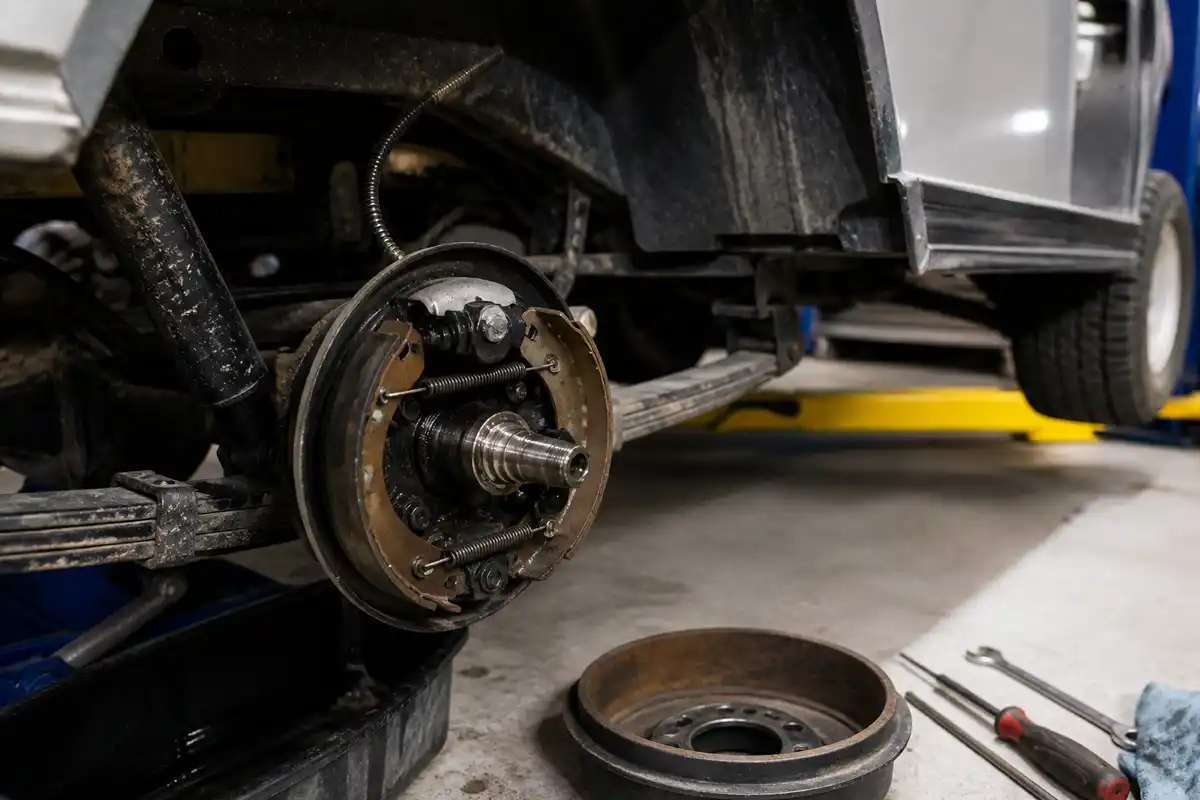
Worn brake shoes can also contribute to the problem. As they wear unevenly, they may not retract properly inside the drum. Dirt, rust, or debris inside the brake assembly can further interfere with smooth movement.
In some cases, the return springs that pull the brake shoes back into place may weaken or fail. When this happens, the brakes do not fully disengage after use.
The Role of Proper Adjustment
Adjustment is often the key to solving brake drag without replacing parts. Brake cables must be set with the correct amount of slack so that the system engages when needed but fully releases when the pedal is lifted.
If the cables are too loose, braking performance suffers. If they are too tight, drag occurs. Finding the correct balance is essential.
Adjustments are usually made at the cable ends near the rear wheels or under the cart. Turning the adjustment nuts changes the tension in the system. The goal is to ensure the wheels spin freely when the cart is lifted and the brake pedal is not pressed.
This process may take a few attempts to get right, but it is one of the most effective ways to restore proper performance.
Practical Fixes That Restore Performance
Fixing brake drag starts with inspection. Begin by lifting the rear of the cart and manually rotating the wheels. If they do not spin freely, the brakes are likely dragging.
Check the brake cables for excessive tension. Loosening them slightly can often resolve the issue immediately. Make small adjustments and test the wheel movement after each change.
If adjustment does not solve the problem, the next step is to inspect the brake assembly. Removing the drum allows you to check for worn shoes, damaged springs, or buildup that could be causing resistance.
Cleaning the components and replacing worn parts can restore proper function. In many cases, simply removing debris and ensuring everything moves freely is enough.
Lubricating pivot points and ensuring all mechanical parts operate smoothly can also prevent future issues. Brake systems rely on free movement, and even minor resistance can lead to drag over time.
Why You Should Fix Brake Drag Quickly
Ignoring brake drag can lead to bigger problems. The constant resistance puts extra strain on the motor and batteries, which can shorten their lifespan. It also increases wear on the brake components themselves, leading to more frequent repairs.
Performance will continue to decline if the issue is not addressed. What starts as a slight slowdown can eventually turn into a cart that struggles to move at all.
Fixing the problem early not only restores performance but also prevents unnecessary damage to other parts of the cart.
Final Thoughts
Brake drag is a common but fixable issue that can significantly impact how your golf cart performs. While it may seem like a complex problem, it is often caused by simple mechanical factors such as cable tension or worn components.
By taking the time to inspect and adjust the system properly, you can eliminate drag, improve efficiency, and extend the life of your cart.
Golf Cart Brake Drag FAQ
A very common reason is brake drag. If the brakes are not fully releasing, they create constant resistance that makes the cart feel weak.
Lift the rear wheels and spin them by hand. If they do not rotate freely, the brakes are likely dragging.
Yes, this is one of the most common causes. If the cables are too tight, they keep pressure on the brakes even when you are not pressing the pedal.
Yes, it forces the motor to work harder, which drains the batteries faster and reduces overall range.
Not always. Many cases are solved with simple adjustments or cleaning. Replacement is only needed if parts are worn or damaged.
Related Service: Golf Cart Brakes and Suspension Service
- 10740 CA-41, Madera, CA 93636
- (559) 831-1971 (ext 104)