A golf cart that does nothing when you turn the key can be frustrating, especially when there is no sound at all from the solenoid. That clicking sound is one of the most important indicators in your electrical system. When it is missing, it tells you that power is not reaching the point where the cart begins to move.
Understanding what that silence means is the first step toward fixing the problem.
What No Click Actually Means
The solenoid acts like a gate between the battery pack and the motor. When you turn the key and press the accelerator, a small electrical signal activates the solenoid, which then allows full battery power to flow to the motor.
When there is no click, it means the solenoid is not being activated. This does not automatically mean the solenoid is bad. In many cases, the issue is somewhere in the control circuit that tells the solenoid to engage.
That circuit includes the batteries, key switch, wiring, and often a microswitch connected to the accelerator pedal. If any part of that chain fails, the solenoid will stay silent.
Key Switch Issues
One of the most common causes of a no click condition is a faulty key switch. The key switch is responsible for sending power into the activation circuit. If it fails internally or loses connection, the signal never reaches the solenoid.
This problem can develop over time due to wear, corrosion, or loose wiring behind the dash. In some cases, the switch may still turn normally but fail to pass current.
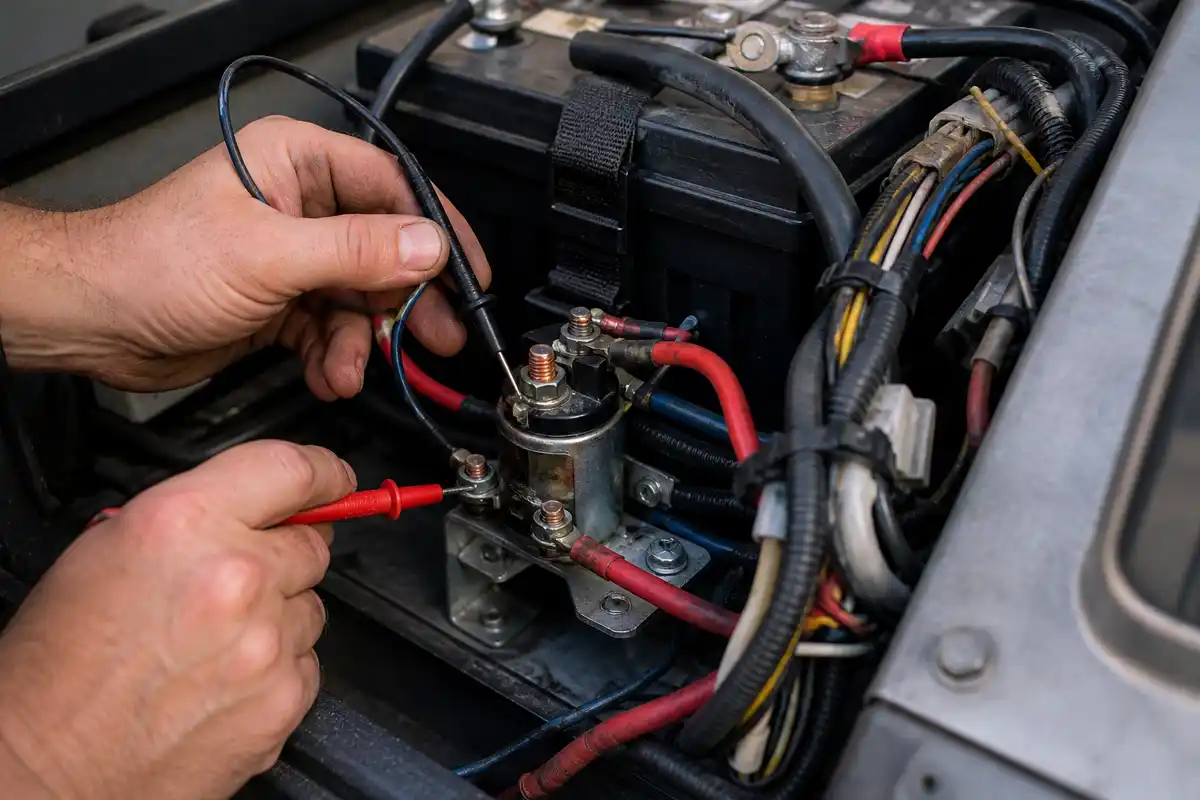
Testing the key switch is relatively simple. With a voltmeter, you can check whether voltage is present on both sides of the switch when it is turned on. If power enters the switch but does not come out, the switch is likely the issue.
Loose or corroded terminals can create the same symptoms, so it is worth inspecting the wiring before replacing the switch.
Battery Problems
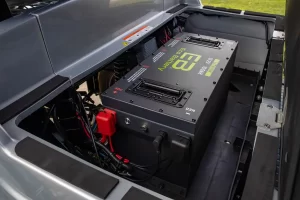
Low or disconnected batteries are another major cause of a silent solenoid. Even though the solenoid uses only a small amount of power to activate, it still requires proper voltage to function.
If your battery pack is weak, partially discharged, or has a bad connection, the activation circuit may not receive enough voltage to trigger the solenoid. This is especially common in carts that have been sitting unused.
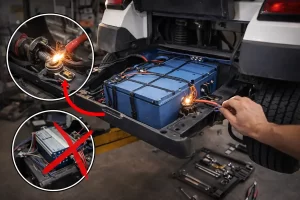
Corrosion on battery terminals can also interrupt the flow of electricity. Even if the batteries are fully charged, poor connections can prevent the signal from reaching the solenoid.
A quick voltage check across the pack can reveal whether the batteries are supplying adequate power. Cleaning and tightening all connections is often enough to restore proper function.
The Hidden Culprit: Microswitch Failure
A frequent but often overlooked cause of a no click issue is a faulty microswitch. These small switches are typically mounted near the accelerator pedal and are responsible for signaling that the cart is ready to move.
When you press the pedal, the microswitch closes and completes the circuit that activates the solenoid. If this switch fails, the solenoid never receives the signal, even if everything else is working correctly.
This issue is widely discussed in owner communities, including insights shared on Buggies Gone Wild, where many users report chasing electrical problems only to find that a simple microswitch was the root cause.
Because microswitches are inexpensive and subject to wear, they are often one of the first components worth checking when diagnosing a no click condition.
Practical Fixes That Work
Solving a no click issue requires a step by step approach. Start by confirming that the batteries are fully charged and that all connections are clean and secure. This eliminates one of the most common failure points.
Next, test the key switch to ensure it is delivering power into the system. If the switch is working correctly, move further down the circuit and check for voltage at the solenoid’s small terminals when the key is on and the pedal is pressed.
If there is no voltage at the solenoid, the problem lies somewhere upstream. This is where the microswitch, wiring, or connectors should be inspected closely.
If voltage is present at the solenoid but it still does not click, then the solenoid itself may be faulty and in need of replacement.
Taking a methodical approach prevents unnecessary part replacements and helps isolate the exact cause of the issue.
Final Thoughts
A golf cart that produces no solenoid click is usually suffering from a simple electrical interruption rather than a major failure. While the solenoid often gets blamed, the real issue is frequently found in the key switch, battery connections, or microswitch.
By understanding how the activation circuit works and testing each component in sequence, you can quickly identify the problem and get your cart back in operation.
Solenoid FAQ
This usually indicates that power is not reaching the solenoid activation circuit. Common causes include dead batteries, bad connections, or a faulty key switch.
Yes. A no click condition is one of the most common electrical problems in golf carts and is often caused by simple, fixable issues.
Yes. Even though the solenoid uses minimal power, it still requires sufficient voltage to activate.
If pressing the accelerator does not trigger any response and there is no click, the microswitch may not be closing the circuit. Testing it with a meter can confirm failure.
Yes, but it is less common than upstream issues. If the solenoid is receiving voltage and still does not click, it may be defective.
Resort Life Carts Golf Cart Service Center
- 10740 CA-41, Madera, CA 93636
- (559) 831-1971 (ext 104)